Friday, June 17, 2005

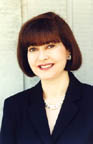
Professor Beth Severy-Hoven

Classics Faculty, Professor, Macalester College, St. Paul, MN: "Professor Severy-Hoven specializes in Roman history and the history of women in the ancient Mediterranean. She has published a book on the development of Rome's first imperial family, Augustus and the Family at the Birth of the Roman Empire (Routledge 2003). Her more recent work involves the wall painting in a house in Pompeii, and the roles of women in different dynasties of the Roman empire. Her recent courses include Elementary Latin, Homeric Greek, Roman History, the Junior/Senior Seminar in Classics, and the First Year Course Amazons & Aristotle. Professor Severy-Hoven also supervises the January in Rome program. "

Tel# (651) 696-6721
Email: severy@macalester.edu

Thursday, May 26, 2005

Harold C. Gotoff

University of Cincinatti:

The John Miller Burnam Professor of Latin and Romance and Palaeography, Professor Gotoff received his PhD from Harvard University in 1965. His research interests include Latin prose, rhetoric, Virgil, textual criticism.

"I am continuing my study of Ciceronian stylistics, trying to understand the relationship between composition and nuance, primarily in the periodic style of his oratory. I began, in my commentary on Pro Archia Poeta, trying to analyse and describe the variety of Ciceronian periods. In Cicero's Caesarian Speeches I attempted to relate the effect of various kinds of composition on rhetorical strategies. My text now is De Lege Agaria and my emphasis is on the forms and flow of Cicero's presentation beyond the limits of the syntactic period, and, within such periods, on the use of complex and ornate phrases. The speeches that make up the collection have rarely received extensive commentary; in English there is no such complete book. I am working on a historic, rhetorical, and stylistic commentary on the three speeches. Because the rarity of critical editions of the text, I am in the process of re-recollating a number of the manuscripts, particularly Vat. Lat 11458, Poggio's apograph, only used once since Campana discovered it half a century ago."

Tuesday, May 17, 2005

Heinrich von Staden

"Heinrich von Staden is one of the world's foremost authorities on ancient science and medicine. His book Herophilus: the Art of Medicine in Early Alexandria (1989) is a major contribution to the history of Greek intellectual discourse. Von Staden's broad range of interests includes classical philosophy and literature. Among his current projects is a book-length work on Erasistratos (the Hellenistic pioneer of human dissection), a study of the relation between "nature" and "art" (techne) in ancient science, and a study of medical ethics in ancient Greece and Rome.

Ph.D., Universitat Tubingen, 1968; William Lampson Professor of Classics and Comparative Literature, Yale University, 1997-98; Professor, Institute for Advanced Study, 1998-; Charles Goodwin Award of Merit, American Philological Association, 1992; William H. Welch Medal, American Association for History of Medicine, 1993; Corresponding Fellow, British Academy; Member, Association des Etudes Grecques en France, American Philosophical Society, Acad?mie des Inscriptions et Belles Lettres, Institut de France; Corresponding Member, Akademie der Wissenschaften, Gottingen."

Professor von Staden is a professor at the Institute for Advanced Study.

"The Institute is a private, independent academic institution that enjoys close, collaborative ties with Princeton University as well as Rutgers, The State University of New Jersey, and other nearby institutions."

"A compelling lecturer with an unusual talent for synthesis and exposition, Professor von Staden has given more than 75 external lectures at universities and institutions both here and abroad. His work on medicine is informed by a thoroughly professional knowledge of philosophy, in which he was trained as a doctoral candidate in Germany. While he approaches the culture of the ancient Mediterranean world mainly through the history of its thought and ideas, he retains from his classical background a strong philological base that is reflected in several important articles on semantics.

Professor von Staden gave a lecture, "When Physicians Err: Responses to Medical Failures in Antiquity," in the Institute's Public Lecture Series. In ancient Greece and Rome medical authors often referred to disorders caused or aggravated by medical intervention. Many physicians displayed an awareness of a tension between their claim to an efficacious professional expertise, based on scientific methods, and the frequency with which even expert practice led to unintended harmful consequences. The lecture explored strategies physicians adopted in response to this tension, their accounts of the reasons for the fallibility of scientific medicine, and moral and social responses to medical failures."

"Professor von Staden has published numerous articles and reviews, and is the author of several books, including his work on the Alexandrian doctor Herophilus. Herophilus: the Art of Medicine in Early Alexandria (1989, second edition 1994) is widely regarded as a critically important resource for study not only of the Hellenistic period but of the whole history of Greek medicine. Among Professor von Staden?s current projects is an edition of Erasistratos with full commentary, a companion volume to Herophilus. Von Staden is also working on an edition of six treatises by Galen, as well as a book-length study on ancient and mediaeval theories of language."

Friday, May 13, 2005

Maud Gleason

Maud Gleason: "Maud studies the cultural and social world of Greeks in the Roman Empire, with a particular interest in issues of gender, performance, and power. She is the author of Making Men: Sophists and Self-Presentation in Ancient Rome (Princeton 1995).

One life Gleason examines in this work is the first-century public-speaker and super-star Favorinus.

As a 'Gaul who spoke Greek, a eunuch prosecuted for adultery, and a man who quarreled with the emperor and was still alive', to quote Philostratus' account of his own paradoxical self-description, Favorinus was a bizarre figure, good -- or hard -- to think with. He flaunted his own precarious position within gender, class, and racial categories, and this very flaunting means that the descriptions of Favorinus both by himself and by others are extremely revealing of the categories he puts under such strain. - Bryn Mawr Classical Review

Her study of Greek cities under Roman rule will appear in the Blackwell Companion to the Roman Empire."

Her email address: maud@stanford.edu

Friday, April 29, 2005

Diana Kleiner

PBS: The Roman Empire in the First Century: "Diana E. E. Kleiner is an art historian known worldwide for her expertise on Roman sculpture. Professor Kleiner is the Dunham Professor of Classics and History of Art, and Deputy Provost for the Arts at Yale University, and is the author of numerous books and articles on Roman art and its political and social context. Her books Roman Group Portraiture: The Funerary Reliefs of the Late Republic and Early Empire, and Roman Imperial Funerary Altars with Portraits are considered the definitive works in their field. Her more recent book, Roman Sculpture has become the fundamental reference on the sculpture of Rome for students, specialists, and the general public. Along with a colleague at Yale, she curated an exhibition at the Yale University Art Gallery, entitled 'I, Claudia: Women in Ancient Rome,' which opened at Yale in September 1996, and traveled to San Antonio, Texas, and Raleigh, North Carolina. The exhibition, which was funded in part by the National Endowment for the Humanities, brought together some of the finest works of Roman art in the United States and was accompanied by a catalogue of the same name. In 2000, it was followed by a sequel volume: I, Claudia II: Women in Roman Art and Society. Professor Kleiner's courses at Yale, where she has taught since 1980, focus on subjects such as Augustan Rome, Roman sculpture, Roman architecture, and women in Roman art."

Her email address: diana.kleiner@yale.edu

Judith Hallett

PBS: The Roman Empire in the First Century: "Judith Hallett is Chair of the Classics Department and Professor of Classics at the University of Maryland at College Park. Currently Associate Editor of the journal Classical World, she has lectured and published widely on Roman literature and culture in the Augustan Age and early imperial periods with a special focus on women, sexuality, and the family. Author of the book, Fathers and Daughters in Roman Society: Women and the Elite Family (Princeton 1984), she has recently co-edited (with M.B. Skinner) Roman Sexualities (Princeton 1997) and (with S. K. Dickison) Rome and Her Monuments (Bolchazy-Carducci 2000); she has also contributed chapters to several volumes of scholarly essays, including Women and Christian Origins (Oxford 1999). She has worked with Erich Segal on the ABC-TV sports documentary, THE ANCIENT GAMES, and has appeared on the Canadian Broadcasting Company's Court of Ideas radio series as an 'expert witness' on Sappho, Augustus, Nero and Boudicca: she has also appeared on several History Channel programs, including the 1999 History of Sex."

Her email: jh10@umail.umd.edu

Erich Gruen

PBS: The Roman Empire in the First Century: "Erich Gruen has been Professor of History and Classics at the University of California, Berkeley since 1966, with special interests in Greek and Roman History, and the Jews in the Greco-Roman World. Educated at Columbia, Oxford, and Harvard Universities, Professor Gruen has received numerous honors and awards for his scholarship and teaching, including fellowships from the Institute for Advanced Studies at the Hebrew University of Jerusalem (1996) and the National Endowment for the Humanities (1996). He was a Resident in Classics at the American Academy in Rome in 1990. More recently, he received a President's Fellowship in Humanities (1999-2000), the Austrian Cross of Honor for distinguished work in scholarship or the arts (1999) and was elected as a member to the American Academy of Arts and Sciences (1986) and the American Philosophical Society (2000). Professor Gruen is a member of the Editorial Board for the Journal of Interdisciplinary History and the American Journal of Ancient History, and his publications include Last Generation of the Roman Republic (1974, nominated for a National Book Award), The Hellenistic World and the Coming of Rome (1988, awarded the James H. Breasted Prize), and Heritage and Hellenism: The Reinvention of Jewish Tradition (1998)."

email: gruene@berkeley.edu

Karl Galinsky

PBS: The Roman Empire in the First Century: "Karl Galinsky was born in Alsace in 1942 and received his Ph.D. at Princeton in 1966. For many years he has taught at the University of Texas at Austin where he currently is the Floyd Cailloux Centennial Professor of Classics and a Distinguished Teaching Professor. He is the author of several books and numerous articles on various aspects of Roman civilization, including literature, art, history, and religion. His scholarship has been supported by prestigious research awards, such as fellowships from the Guggenheim and von Humboldt Foundations and the National Endowment for the Humanities, and by visiting appointments at the Institute for Advanced Study in Princeton and the American Academy in Rome. The holder of four awards for teaching excellence, he regularly teaches a large introductory course on Roman civilization. He has worked extensively with general audiences and schoolteachers.

Professor Galinsky lived in Rome for three years and has conducted many study tours in the Mediterranean and Roman Europe for academic and other organizations. He is a specialist in the age of Augustus. His most recent book, Augustan Culture: An Interpretive Introduction (Princeton University Press paperback, 1998), has reached a large audience, and he is currently preparing The Cambridge Companion to the Age of Augustus for the Cambridge University Press."

e-mail: galinsky@mail.utexas.edu

Keith Bradley


PBS: The Roman Empire in the First Century: "Keith Bradley is Professor of Greek and Roman studies at the University of Victoria. A specialist in the social and cultural history of ancient Rome, he is the author of five books: Suetonius' Life of Nero: An Historical Commentary (1978); Slaves and Masters in the Roman Empire (1986); Slavery and Rebellion in the Roman World (1989); Discovering the Roman Family (1991); and Slavery and Society at Rome (1994). Professor Bradley has also written more than one hundred articles, essays, and reviews. He is a Fellow of the Society of Antiquaries, a Fellow of the Royal Society of Canada, and presently holds a Killam Research Fellowship. He is currently at work on a book on Apuleius. Professor Bradley spent the first ten years of his teaching career in the United States, principally at Johns Hopkins and Stanford, before moving to Canada in 1980."

Keith Bradley's email: Keith.R.Bradley.45@nd.edu

Friday, January 28, 2005

David Breeze


The University of Edinburgh Bulletin - No 8, May 1996: "David Breeze was born in Blackpool in 1944 and educated at University College, Durham University. He graduated with a BA in Modern History in 1965 and proceeded to undertake research on the junior officers of the Roman army; his PhD was awarded in 1970.

In 1969 David Breeze joined the staff of the Inspectorate of Ancient Monuments, then part of the Ministry of Public Building and Works, now Historic Scotland, and where he has risen from the rank of Assistant Inspector to Chief Inspector.

David Breeze's primary research interests are the Roman army and Roman frontier studies. He has published several books on Hadrian's Wall and Roman Scotland and many papers in British and foreign journals. He has also excavated extensively in North Britain, including on both Hadrian's Wall and the Antonine Wall.

Dr Breeze served as President of the Society of Antiquaries of Scotland from 1987 to 1990, Chairman of the 1989 Hadrian's Wall Pilgrimage, and on the council of several learned societies. He is a member of the International Committee of the Congress of Roman Frontier Studies. Dr Breeze is a Visiting Professor at the Department of Archaeology, University of Durham."

Nigel Nicholson


Classic in life and lesson: "In past years, he has led seminars on the weirdness of Ovid's Metamorphoses, the shape of Augustan ideology, the Roman experience of love, the poetess Sulpicia, and, most recently, how Roman poets do nothing but talk about their own poetry! Now, two national groups have recognized what Dr. Nigel Nicholson's fans at Reed College in Southeast Portland, Oregon have known for a decade. The tall, slim Englishman who makes the ancient Greeks and Romans come alive for his students has been named the 2004 Oregon Professor of the Year. The award is given jointly by the Carnegie Foundation for the Advancement of Teaching and the Council for Advancement and Support of Education.

At Reed, where rigor is the norm, Nicholson's high standards stand out. He learned them at boarding school near his childhood home in Surrey, southwest of London.

Latin instruction started at age 9, Greek at age 11, in a setting he described as similar to Reed. Both schools are intense, demanding places, he says, where the classics remain vital and relevant, neither oddity nor afterthought.

Nicholson idealized his teachers, especially those who taught the languages and literature of Greece and Rome.

'Their classes were fun. They were disciplined. They were challenging. They gave you everything you needed to get through, and they also just sort of knew their stuff,' he says. 'I always thought that would be an exciting life.'

After earning his undergraduate degree in classical literature and philosophy from Oxford University, he considered a career in the British civil service. Not ready to give up his studies, he chose instead to enroll at the University of Pennsylvania and was surprised by how much he enjoyed teaching undergraduates. Nicholson received his doctorate in 1994. Reed hired him a year later.

One of his new courses, "The Ancient Novel", offered a new perspective on these works and how they were transformed over the four hundred years of their production by changing social context.

" With its absurd plots and apparent lack of moral depth, its interest in travel and the exotic, its insistence on positive female protagonists, its longevity and unfavorable critical reception, the Greek 'Novel' is strikingly different from other Classical genres. This seminar studied those novels that remain intact (Daphnis and Chloe, Clitophon and Leucippe, About Callirhoe and The Aethiopica), and compare them to their Roman counterparts (Petronius' Satyricon and Apuleius' Golden Ass)."

See Dr. Nicholson's Home Page
email address: Nigel.Nicholson@reed.edu

Friday, October 08, 2004

Michael Grant

"Professor Michael Grant, who died in August, 2004, was a don at Cambridge, Professor of Humanity (Latin) at Edinburgh, and vice-chancellor at the Universities of Khartoum and Queen's, Belfast, but was best known as a prolific populariser of ancient history who published nearly 50 books on the Greeks, Romans and early Christianity.

Grant was always a lucid and erudite writer, who took the view that a study of the classical world was both "infinitely worth studying in its own right, without any consideration of modern analogies" and also that "without Latin, people are handicapped because they do not understand their past, and cannot therefore effectively plan their futures".

This attitude did nothing to impede his range, nor his appeal to the ordinary reader as well as the academic professional. As well as scholarly publications on the coinage of Rome (he was a distinguished numismatist), he produced biographies of Julius Caesar, Nero, Herod, Cleopatra, Jesus, St Peter and St Paul; accounts of the literature, history, art, mythology and social life of Greece and Rome; and found time to examine the Middle Ages and ancient Israel.

Books such as The Twelve Caesars (1975) and Gladiators (which was reissued recently after Ridley Scott's film) sold well in Penguin editions and enabled him to boast of a position as "one of the very few freelances in the field of ancient history" and, for the last 30 years or so, to work from his home in Italy.

The first of his general surveys, Ancient History (1952), and its companion Roman Literature (1954) immediately made clear his gifts of clarity and scholarship. Myths of the Greeks and Romans appeared in 1962, was twice updated, and was followed by Roman Myths. The Climax of Rome (1968) dealt with the neglected period of Rome after the second century AD; The Ancient Historians (1970) summarised the development - the invention, almost - of history; The Army of the Caesars (1974), The Twelve Caesars and The Roman Emperors (1985) covered the rule and supremacy of Rome.

But there was scarcely an aspect of ancient life which did not receive Grant's attention: The History of Rome (1978); The Jews in the Roman World (1973); Art in the Roman Empire (1995); The Classical Greeks (1989); The Hellenistic Greeks (1990) and many more were ground out by his pen." - The News Telegraph

Friday, July 30, 2004

Ralph W. Mathisen

RALPH W. MATHISEN joined the faculty of the University of Illinois at Urbana-Champaign after 23 years at the University of South Carolina, where he was Louise Fry Scudder Professor of Humanities. He is a specialist in the society, culture, and religion of Late Antiquity.

Professor Mathisen recent works include Barbarian Intellectuals in Late Antiquity, a study of the late Roman comedy The Querolus, and the life and letters of Desiderius of Cahors.

He has authored or edited ten books, including People, Personal Expression, and Social Relations in Late Antiquity, 2 vols. (Univ. of Michigan, 2003); Society and Culture in Late Antique Gaul. Revisiting the Sources (Ashgate, 2001) (with D.R. Shanzer); Law, Society, and Authority in Late Antiquity (Oxford Univ. Press, 2001); and Ruricius of Limoges and Friends: A Collection of Letters from Visigothic Aquitania (Liverpool Univ. Press, 1999), and has published over 60 scholarly articles including Valentinian.

He is Director of the Biographical Database for Late Antiquity Project, and a Fellow of the American Numismatic Society. He has also served in a number of capacities for the Byzantine Studies Conference, the American Philological Ass., the Ass. for History and Computing, the Ass. of Ancient Historians, the Classical Ass. of Midwest and South, the Soc. for Ancient Numismatics, the Society for Late Antiquity, and the U.S. National Committee for Byzantine Studies.

He maintains the Geography of Roman Gaul website: http://www.sc.edu/ltantsoc/geogmain.htm

He received his Ph.D. from the University of Wisconsin in 1979.

Contact information:
RALPH MATHISEN [ruricius@msn.com]
Department of History, University of Illinois
309 Gregory Hall, 810 S Wright ST, MC-466, Urbana IL 61801 USA
Phone: 217-244-2075 FAX: 217-333-2297

Friday, July 23, 2004

Andrew Wallace-Hadrill

"Andrew Wallace-Hadrill is director of the British School at Rome and Professor of Classics at Reading University. An expert on Pompeii, Professor Wallace-Hadrill was awarded the AIA James R. Wiseman Award in 1995 for his book, Houses and Society in Pompeii and Herculaneum (1994). He has written several other books including, Augustan Rome (1993) and Suetonius: the Scholar and his Caesars (1985)."

He is presently director of BSR's Pompeii Project.

"The project aims to take a small slice of the city, a single block of houses or insula, excavated first half a century ago, yet never published, and to see what can be said about it now to cast light on the city, its history and its life. Its three main components are archival research into the original excavation of 1952-3, the artefacts then excavated, recording and analysis of the standing remains, and the excavation of levels below that sealed by the eruption of AD 79."

His work has also served as resource material for such interesting programs as "The Private Lives of Pompeii" produced by Channel 4 and "Roman Empire in the First Century" produced by PBS.

His enthusiasm is so natural and refreshing, its contagious! I even sent an e-mail to The Teaching Company asking them to produce some courses on Rome with Andrew as the professor. I see Andrew produced an excellent article on Pompeii for the BBC website.


Tuesday, July 13, 2004

Kenneth W. Harl

Kenneth W. Harl

"Kenneth W. Harl is Professor of Classical and Byzantine History at Tulane University in New Orleans, where he has been teaching since 1978. He earned his Bachelor's degree from Trinity College and went on to earn his Master's and Ph.D. from Yale University.

Dr. Harl specializes in the Mediterranean civilizations of Greece, Rome, Egypt, and Byzantium. He has published numerous articles and is the author of Civic Coins and Civic Politics in the Roman East, A.D. 180-275 and Coinage in the Roman Economy, 300 B.C. to A.D. 700. He is also a veteran field researcher who has served since 1999 on the Editorial Board of the American Journal of Archaeology."

"Every scholar in the field of Greco-Roman history knows Ken Harl's works on coinage. His ability to explain all manners of social, economic and historic events using coins is a terrific tool to teach students," says Jason Sanchez, a student who accompanied Dr. Harl on one of his guided trips to Turkey.

One of his favorite personnages of Roman history is Julia Domna, the empress of the Serverus Roman Empire, circa 193 C.E.

His latest course for The Teaching Company is Rome and the Barbarians. Other courses he has produced for The Teaching Company is Great Civilizations of Asia Minor and The World of Byzantium.

See also: Head and Tales

Wednesday, June 23, 2004

J. Rufus Fears

The establishment of a shrine to Mens was authorized at the behest of the Sibylline Books following the disastrous Roman defeat at Lake Trasimene in 217 BC. The action was taken at the instruction of Q. Fabius Maximus, who was dictator and augur and would become pontifex in 216. The introduction of the worship of Mens reflects the employment of cultic innovations to justify the policy of Fabius and his supporters." - J. Rufus Fears, The Virtue of Mens: Roman Cult and Greek Thought

I had the pleasure of learning from Dr. Fears vision of Greek and Roman Society when I took two audio courses, Famous Greeks and Famous Romans, from The Teaching Company. A 15-time award winner for outstanding teaching including "Professor of the Year" in his present position at the University of Oklahoma, Professor Fears incisive anecdotes brings the ancient societies to life and reflects his enthusiasm for classical studies.

Professor Fears has been instrumental in organizing the Societas Colloquium, an international Symposium on Roman Imperial Ideology. He has served as president of the Vergillian Society, a group of scholars who hold symposia "focusing upon the archaeology, ancient history, philology, linguistics, iconography, and ritual activities at Italian cult centers, and the degree to which these cults were retained, modified, or replaced under foreign influences."

He has also authored The Cult of Virtues and Roman Imperial Ideology.

His e-mail address is listed as: J.R.Fears-1@ou.edu